Online certification gives you the flexibility to learn assisted stretching on your schedule. You can study the techniques, understand the principles, and complete your certification without stepping away from your work or personal commitments.
But assisted stretching is a hands-on skill.
Watching a technique and performing it confidently on a real client are two very different experiences. That is where in-person training can make a major difference.
At Stretch Center, you do not have to decide everything upfront. You can add the in-person training when you purchase your online certification, while you are completing it, or even after you are already certified.
That flexibility sets the program apart.
Start Online and Upgrade When You Are Ready
Many certification providers require you to choose an online or in-person path before you begin. Others make hands-on training part of a larger package that must be purchased immediately.
Stretch Center gives you more control.
You can begin with the online certification, experience the curriculum, and decide later whether hands-on coaching is right for you.
This means you can:
- Start learning immediately from home.
- Complete the certification around your schedule.
- Spread out the cost of your education.
- Add live training when travel and timing work for you.
- Upgrade after you have identified the skills you want to improve.
You are never locked out of the in-person experience simply because you started online.
Turn Knowledge Into Confidence
The online certification provides the foundation. It teaches essential concepts such as anatomy, safety, contraindications, client communication, assessments, stretching techniques, and session protocols.
In-person training helps you apply that knowledge.
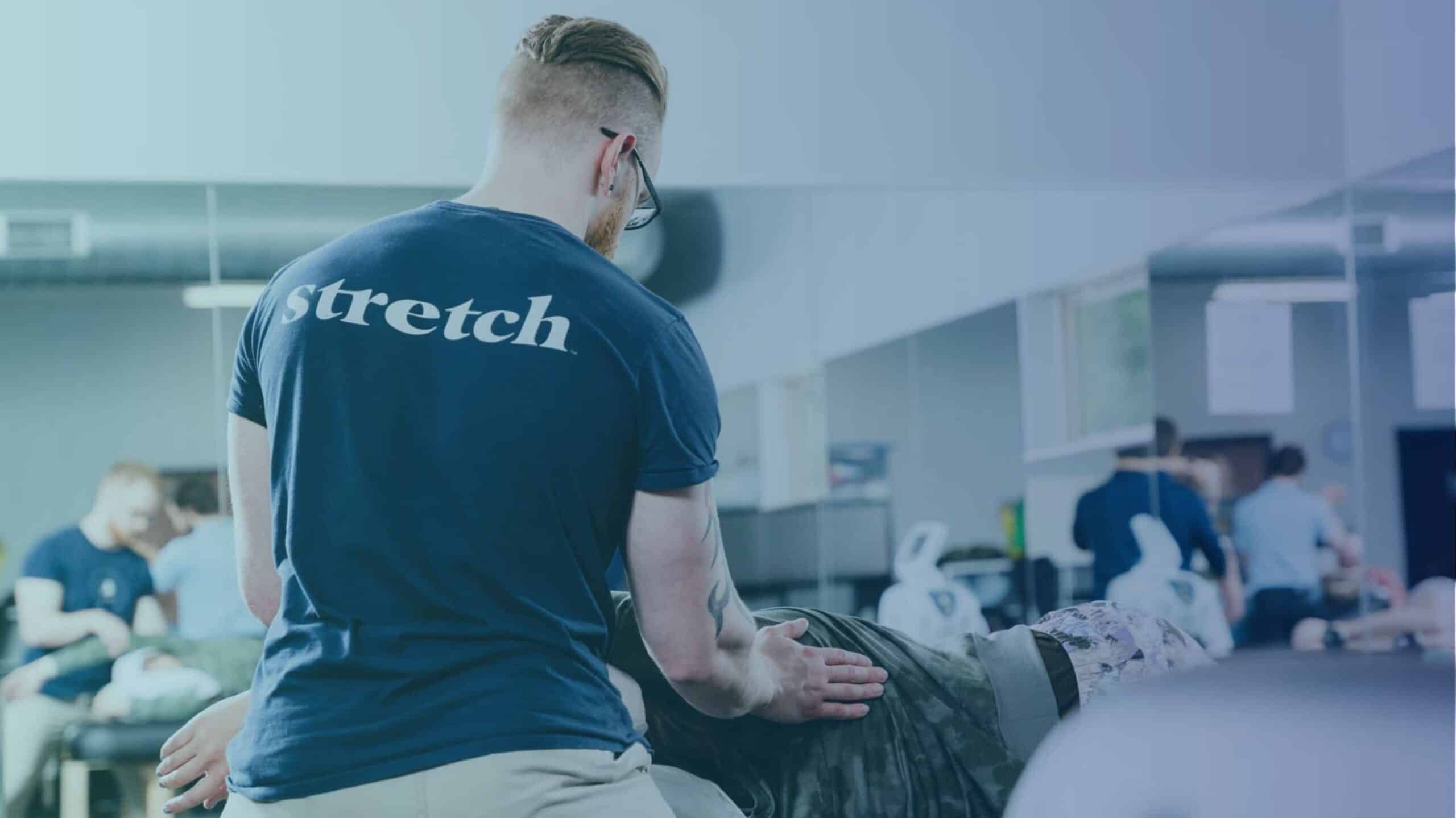
During live practice, instructors can observe your positioning, body mechanics, stabilization, pressure, pacing, and communication. Small adjustments can immediately improve how a technique feels for both you and the client.
Instead of wondering whether you are performing a stretch correctly, you receive direct feedback while you practice.
That can help you move from knowing the steps to delivering them with confidence.
Improve Your Hands-On Technique
Assisted stretching involves details that can be difficult to master through video alone.
Where should your hands be placed? Are you stabilizing the client correctly? Are you using leverage efficiently? Is the client compensating? Are you applying too much or too little pressure?
In-person training helps you recognize and correct these issues in real time.
You can develop stronger muscle memory, improve your sense of touch, and better understand what appropriate resistance and end range feel like.
These skills become especially important when you begin working with paying clients.
Learn to Adapt to Real People
Clients do not all move the same way.
One person may be highly flexible, while another has limited mobility, previous injuries, sensitive joints, or difficulty relaxing. A technique that works well for one client may need to be modified for another.
Hands-on training gives you experience working with different body types, mobility levels, and movement restrictions.
You learn how to adjust your positioning, select appropriate progressions, and modify techniques without losing the purpose of the stretch.
That adaptability helps you provide a more personalized and professional experience.
Protect Your Own Body
Good body mechanics are not only important for the client. They are essential for the practitioner.
Poor positioning can place unnecessary strain on your back, shoulders, wrists, and hands. A technique may feel manageable during one session but become exhausting when repeated throughout the day.
Live training helps you use posture, leverage, table setup, and positioning more efficiently.
The goal is to deliver effective stretches without relying on unnecessary strength. Better mechanics can improve your technique while also supporting a longer, more sustainable career.
Build Better Client Sessions
Knowing individual stretches is only part of delivering a professional service.
You also need to know how to assess the client, select appropriate techniques, transition smoothly, manage time, communicate clearly, and create a session that feels organized.
In-person training helps connect these pieces.
You practice turning your online education into a complete client experience rather than simply performing a list of stretches.
This can be especially valuable if you plan to offer assisted stretching as:
- A standalone service
- An add-on to personal training
- Part of a recovery or mobility program
- A new revenue stream for your practice
Attend With Better Questions
Completing the online certification before attending the live program allows you to get more value from the experience.
You already understand the foundational material, so you can focus on practical questions such as:
- How can I improve my positioning?
- How should I modify this technique?
- Why is the client compensating?
- How can I make the session flow more smoothly?
- How do I reduce strain on my own body?
- What should proper resistance feel like?
You arrive prepared to refine your skills rather than starting from the beginning.
Add the Training When It Creates the Most Value
Some students know immediately that they want both online and in-person education. Others prefer to complete the certification first and decide later.
Both approaches work.
You may choose to add in-person training when you are preparing to launch your service, when you want more confidence before working with clients, or after you have practiced enough to recognize where you need additional support.
Stretch Center allows your education to grow with you.
You can begin with the convenience of online learning and add the benefits of live coaching when the timing is right.
The Best of Both Learning Experiences
Online certification gives you flexibility, knowledge, and a strong professional foundation.
In-person training gives you practice, feedback, adaptability, and confidence.
Together, they create a more complete learning experience—but you do not have to purchase everything at once.
Start online. Complete your certification. Add hands-on training when you are ready to take your skills to the next level.
Already enrolled or certified? You can still add the in-person training and continue building your expertise.
Looking for more?